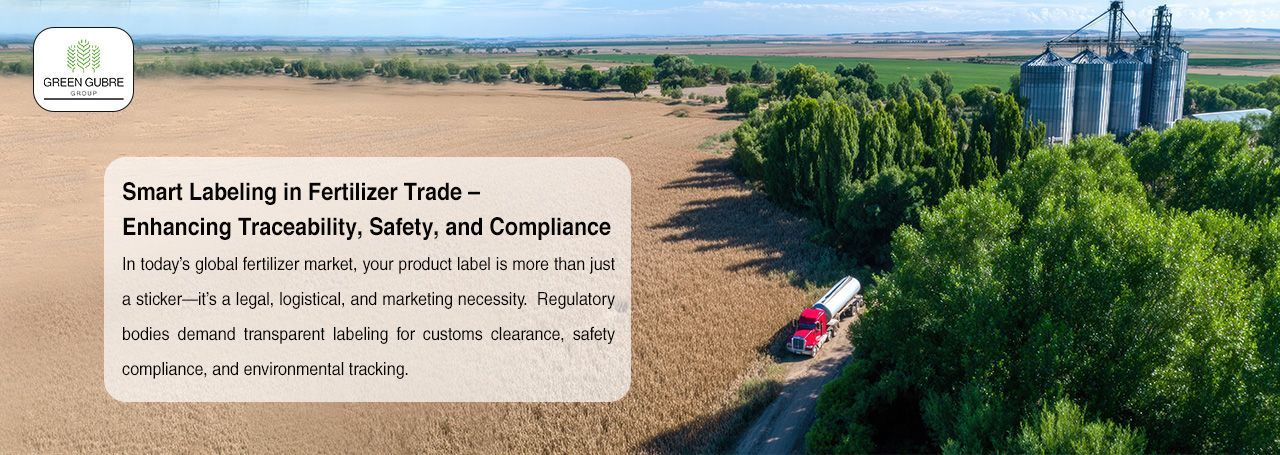
Smart Labeling in Fertilizer Trade – Enhancing Traceability, Safety, and Compliance
Smart Labeling in Fertilizer Trade – Enhancing Traceability, Safety, and Compliance
Introduction: Labels Are the New Passport
In today’s global fertilizer market, your product label is more than just a sticker—it’s a legal, logistical, and marketing necessity. Regulatory bodies demand transparent labeling for customs clearance, safety compliance, and environmental tracking. Buyers expect traceability and quality assurance from the bag onward.
As sustainability and safety regulations tighten worldwide, innovative labeling systems—including QR codes, GHS-compliant symbols, and multilingual documentation—are becoming essential for any fertilizer exporter or distributor aiming to stay competitive in 2026.
🔗 FAO – International Code of Conduct for Fertilizer Management
Why Smart Fertilizer Labeling Matters in 2026
Smart labeling bridges the gap between product, people, and policy. It enables:
- Compliance with international standards (GHS, REACH, EU 2019/1009)
- Traceability across the supply chain
- Instant verification of nutrient content and batch info
- Safety alerts via pictograms and hazard codes
- Localization through multi-language support
Elements of a Smart Fertilizer Label
| Component | Purpose |
|---|---|
| Product Name & Grade | E.g., Urea 46% or NPK 20-20-20 |
| Nutrient Composition | Guaranteed analysis (% N, P₂O₅, K₂O, micronutrients) |
| Batch/Lot Number | For recall, inventory tracking, and traceability |
| Production & Expiry Date | Ensures freshness and legal compliance |
| Manufacturer Info | Full name, address, country of origin |
| QR Code | Links to COA, SDS, product documents, or registration status |
| Safety Symbols | GHS pictograms for storage, transport, and use hazards |
| Application Instructions | Dosage, method, precautions |
| Language | English + local language of the importing country |
Modern digital printing enables high-resolution, weather-resistant labels, even on jumbo bags.
QR Codes and Digital Traceability
QR codes are a game-changer in the fertilizer trade. A single scan can provide:
- Product Certificate of Analysis (COA)
- Material Safety Data Sheet (MSDS)
- Shipment origin and date
- Storage and application guidelines
- Contact for technical support or a distributor
They also protect against counterfeiting by verifying authenticity via your website or platform.
Regional Labeling Standards to Watch
| Region | Key Requirements |
|---|---|
| European Union | Must comply with Regulation (EU) 2019/1009 (mandatory by July 2026) |
| European Union | Requires Arabic + English labels, with customs-stamped COA |
| East Africa (COMESA) | Local importer’s details required on packaging |
| Latin America | lMulti-lingua labels (Spanish/Portuguese), visual safety icons |
| India | Registration under FCO (Fertilizer Control Order); label must state grade & origin |
Poor or missing labeling can result in port delays, penalties, or product rejection.
Green Gubre Group’s Smart Labeling Practices
We ensure every fertilizer shipment is:
- Digitally traceable with QR-coded packaging
- Compliant with REACH, GHS, and EU 2019/1009
- Language-adapted to the importing country
- The label is audited by quality assurance before dispatch
Custom Label Options Available:
- Bilingual or trilingual formats
- Crop-specific usage guides
- Distributor branding (for large orders)
- Label templates for private labeling partners
Conclusion: Labels That Build Trust
Smart labeling is no longer a luxury—it’s a requirement for efficient, credible, and scalable fertilizer distribution in 2026 and beyond. Exporters and manufacturers must treat packaging not just as a container, but as a communication tool.
At Green Gubre Group, we help you meet every global labeling and traceability requirement—whether you’re shipping bulk urea, soluble NPK, or specialty micronutrients.
Label smart. Trade confidently. Grow globally.

Chitosan and Biopolymer Biostimulants: Improving Plant Growth, Stress Tolerance, and Crop Resilience