Micronutrient Blends – Small Elements, Big Impact on Crop Yield
Micronutrient Blends – Small Elements, Big Impact on Crop Yield
Introduction: The Power of the Little Things in Agriculture
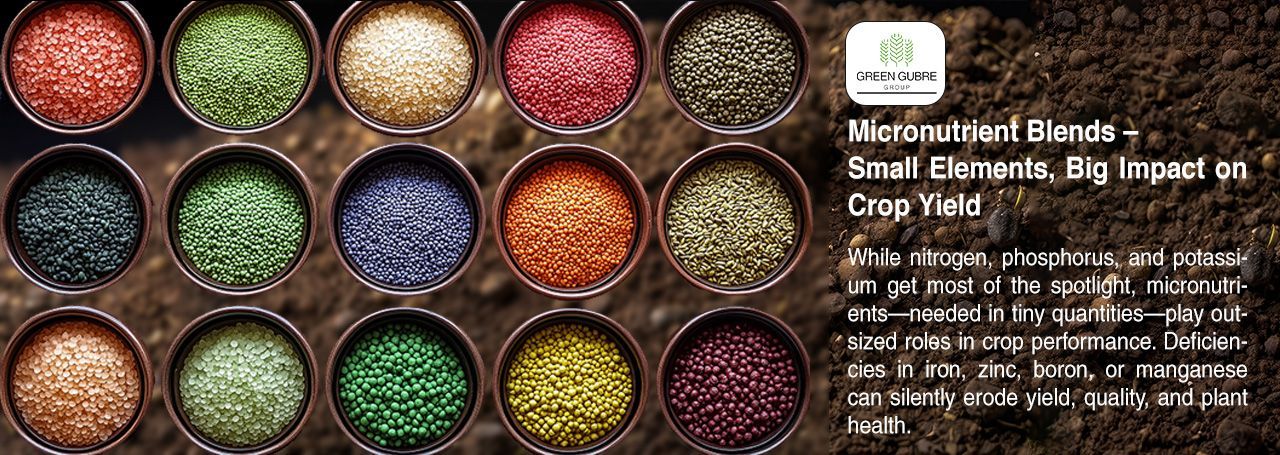
While nitrogen, phosphorus, and potassium get most of the spotlight, micronutrients—needed in tiny quantities—play outsized roles in crop performance. Deficiencies in iron, zinc, boron, or manganese can silently erode yield, quality, and plant health. These elements are crucial for enzyme activation, hormone balance, chlorophyll formation, and reproductive success.
Micronutrient blends, when properly applied, correct hidden hunger, maximize nutrient use efficiency (NUE), and boost returns on traditional NPK applications—especially in intensive farming systems, sandy soils, and high-pH regions.
🔗 https://www.fao.org/land-water/databases-and-software/micronutrients
What Are Micronutrient Fertilizer Blends?
Micronutrient blends are formulations that combine two or more essential trace elements for targeted plant nutrition. They may include:
- Zinc (Zn) – Enzyme activity, seed production
- Iron (Fe) – Chlorophyll synthesis
- Boron (B) – Flowering, fruit set
- Manganese (Mn) – Photosynthesis, nitrogen assimilation
- Copper (Cu) – Disease resistance
- Molybdenum (Mo) – Nitrogen fixation
These blends can be:
- Chelated (EDTA, DTPA, EDDHA) for better solubility and uptake
- Granular for soil broadcasting
- Liquid for fertigation or foliar application
- Custom mixed based on crop or soil test needs
Why Micronutrients Matter
Even when macronutrients are abundant, deficiencies in micronutrients can still limit growth. Here’s what happens when key micronutrients are lacking:
| Micronutrient | Function | Deficiency Symptom |
|---|---|---|
| Zinc (Zn) | Auxin production, protein synthesis | Stunted growth, leaf bronzing |
| Iron (Fe) | Chlorophyll synthesis | Interveinal chlorosis in young leaves |
| Boron (B) | Pollen viability, cell wall strength | Poor fruit set, brittle tissue |
| Manganese (Mn) | Photosystem II activity | Pale spots, leaf curling |
| Copper (Cu) | Lignin synthesis, redox reactions | Dieback, leaf distortion |
| Molybdenum (Mo) | Nitrogen fixation | Chlorosis in legumes |
Micronutrient blends help restore balance, optimize plant metabolism, and support every stage of crop growth.
When and Where to Use Micronutrient Blends
You’ll benefit most from using micronutrient blends when:
- Soil is alkaline (high pH) or calcareous – low Fe, Zn availability
- Soils are sandy or highly leached – prone to B, Mn, Cu deficiency.
- Crops have high micronutrient demand – vegetables, fruits, and oilseeds.
- You apply high rates of NPK, which can dilute micronutrient availability.
- Yield potential is high – micronutrients are yield-limiting at the top end.
Common crops responsive to micronutrient blends:
- Zinc: Maize, rice, wheat, citrus
- Iron: Soybean, leafy greens, citrus
- Boron: Sunflower, beet, tomato, apple
Mn & Cu: Potato, sugarcane, cereals
Application Methods
- Soil Application: Granular blends, coated NPKs, or custom premix
- Foliar Spray: Fast correction for visible deficiencies or during peak demand
- Fertigation: Ideal for greenhouse, high-value, or drip-irrigated crops
- Seed Treatment: Early-stage support, especially for Zn and Mo
Pro Tip: Always use chelated forms in high-pH soils to improve availability and mobility in the plant.
Green Gubre Group’s Micronutrient Solutions
We provide a complete line of micronutrient blends tailored to crop needs, application methods, and local soil conditions.
Available Formulations:
- Chelated Micronutrient Mix (EDTA, DTPA, EDDHA-based)
- Liquid Micronutrient Fertilizers for foliar and fertigation
- Granular NPK + Micronutrient blends (custom ratios)
- Specialty blends for greenhouse and hydroponics.
Supported Crops: Maize, cotton, citrus, vegetables, legumes, potatoes, sugarcane, pomegranate
We also offer:
- Micronutrient mapping and testing
- Custom blending services
- Seasonal crop-specific recommendations
Conclusion: Tiny Nutrients, Massive Results
Micronutrients might be needed in trace amounts, but their impact is anything but small. Optimizing your micronutrient strategy ensures that every dollar invested in fertilizer yields higher-quality and more resilient plants.
By integrating targeted blends into your crop program, you prevent hidden deficiencies, unlock higher productivity, and protect long-term soil health.
Precision agriculture starts with balanced nutrition—right down to the smallest elements.