Foliar Fertilization in Stress Conditions – Rapid Nutrition When Roots Struggle
Foliar Fertilization in Stress Conditions – Rapid Nutrition When Roots Struggle
Introduction: Feeding Through the Leaves When Roots Can’t Cope
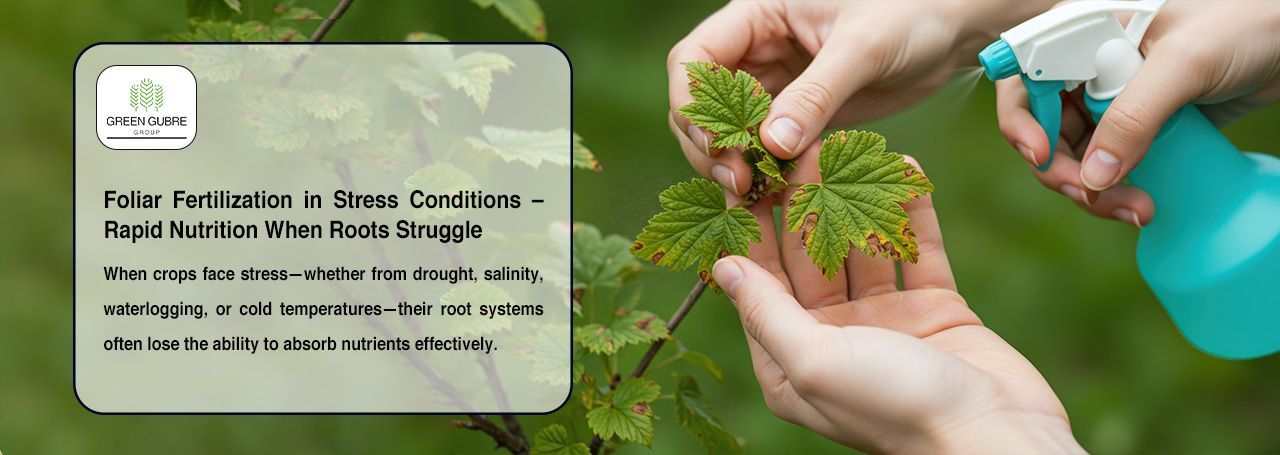
When crops face stress—whether from drought, salinity, waterlogging, or cold temperatures—their root systems often lose the ability to absorb nutrients effectively. Under such conditions, foliar fertilization becomes a critical intervention strategy. By delivering nutrients directly to the leaves, foliar sprays bypass the impaired root system and provide rapid support to keep plants growing, recovering, and producing.
This blog explores when and how foliar feeding can serve as an emergency or supplementary solution during crop stress, which nutrients are most effective, and how to apply them safely and efficiently
🔗 FAO – Foliar Fertilization as a Tool to Improve Crop Performance
Why Foliar Feeding Works Under Stress
Roots absorb nutrients best under stable soil moisture and temperature. But when these conditions are disrupted:
- Drought restricts root activity and nutrient mobility.
- Waterlogging reduces oxygen and microbial function in soil.
- Salinity creates osmotic stress, limiting nutrient uptake.
- Cold soils slow root metabolism and absorption.
Foliar application delivers nutrients directly to leaf tissues through stomata and cuticle, allowing for:
- Fast symptom relief (2–4 days for visible improvement)
- Nutrient delivery during critical growth stages
- Reduced risk of soil-based nutrient losses (leaching, fixation)
Key Nutrients for Foliar Application During Stress
| Nutrient | Benefit Under Stress | Best Form for Foliar Use |
|---|---|---|
| Calcium (Ca) | Strengthens cell walls and improves fruit quality | Chelated Ca or calcium nitrate |
| Magnesium (Mg) | Central to chlorophyll, it boosts photosynthesis | Magnesium sulfate |
| Zinc (Zn) | Supports enzyme function, growth hormones | EDTA-chelated zinc |
| Iron (Fe) | Critical under cold or alkaline conditions | EDDHA or DTPA chelated iron |
| Boron (B) | Improves flowering, pollination, and sugar transport | Boric acid or soluble boron |
| Nitrogen (N) | Kickstarts protein synthesis and leaf growth | Urea (low concentration, ≤1%) |
Constantly adjust concentrations to crop sensitivity and weather conditions to avoid leaf burn.
When to Apply Foliar Fertilizers in Stress Situations
Foliar feeding is most effective:
- At early stress onset, before irreversible damage
- During critical growth phases (e.g., flowering, grain filling)
- After a stress event (e.g., frost, drought recovery)
- In
high-value crops like fruits, vegetables, and greenhouse crops
Avoid foliar feeding during:
- Midday heat (best timing: early morning or late afternoon)
- Rain forecast (sprays must dry to be absorbed)
- Severe stress where leaf function is already impaired
Application Tips for Safe and Effective Foliar Feeding
- Use clean water with a pH between 5.5 and 6.5
- Follow label concentration guidelines strictly.
- Use surfactants to enhance adhesion and penetration.
- Spray uniformly—top and bottom of leaves
- Combine with biostimulants (e.g., amino acids) to improve uptake and stress tolerance.
Perform a jar test when mixing multiple products to check compatibility.
🔗 ScienceDirect – Leaf Nutrient Absorption and Foliar Spray Techniques
Green Gubre Group’s Foliar Fertilizer Solutions
Our foliar nutrition line is formulated to address common stress conditions in high-value crops:
- Fast-Acting Micronutrient Mixes: Zn, Mn, Fe, B in chelated form
- Calcium-Boron Blends: For fruit set and quality
- Low-Burn Urea Sprays: For nitrogen support during vegetative recovery
- Custom Solutions: Based on crop type, stage, and regional stress factors
Each batch comes with:
- COA and MSDS
- Crop-specific application guide
- Compatibility charts for tank mixing
Conclusion: A Leaf-Side Lifeline for Stressed Crops
Foliar fertilization is more than a backup—it’s a frontline tool in modern crop management under stress. Whether you’re managing drought-hit vineyards, frost-affected tomatoes, or salt-stressed lettuces, foliar sprays offer fast, flexible nutrition that roots simply can’t deliver during hard times.
At Green Gubre Group, we help you apply the right foliar products at the right time—because
healthy leaves mean healthier yields, especially when the soil isn’t cooperating.