Slow-Release Fertilizers (SRF) – Enhancing Nutrient Availability for Sustainable Crop Production
Slow-Release Fertilizers (SRF) – Enhancing Nutrient Availability for Sustainable Crop Production
Introduction: Improving Fertilizer Efficiency Through Gradual Nutrient Release
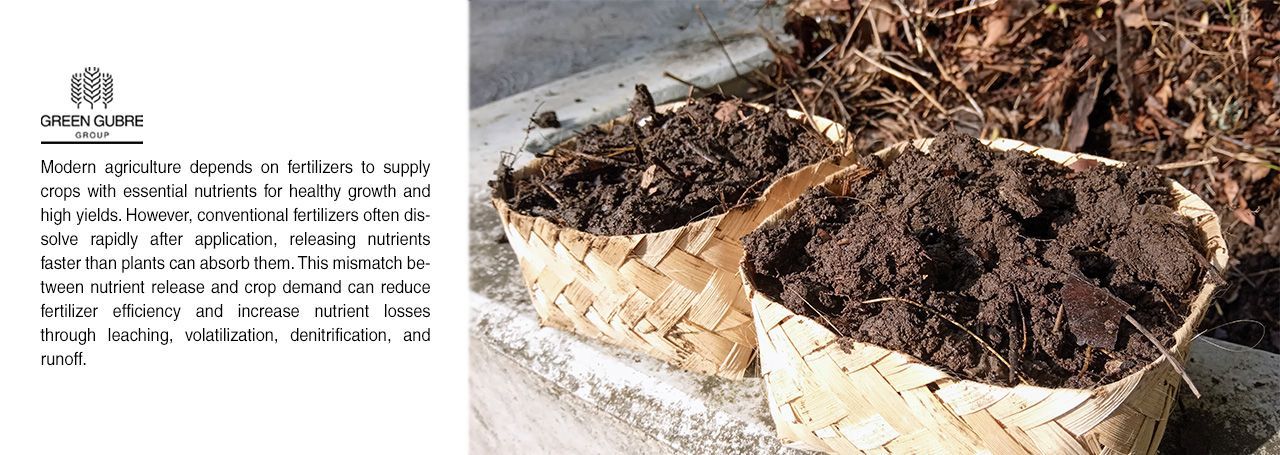
Modern agriculture depends on fertilizers to supply crops with essential nutrients for healthy growth and high yields. However, conventional fertilizers often dissolve rapidly after application, releasing nutrients faster than plants can absorb them. This mismatch between nutrient release and crop demand can reduce fertilizer efficiency and increase nutrient losses through leaching, volatilization, denitrification, and runoff.
To improve nutrient use efficiency, fertilizer manufacturers have developed products that release nutrients more gradually. Among these innovations are
Slow-Release Fertilizers (SRFs), which are designed to delay nutrient availability through chemical composition or biological degradation rather than through physical coatings.
By extending nutrient availability over time, Slow-Release Fertilizers help improve fertilizer efficiency, reduce nutrient losses, minimize environmental impacts, and support more consistent crop growth.
As sustainable agriculture becomes increasingly important worldwide, SRFs are gaining recognition as valuable tools for improving nutrient management across diverse cropping systems.
What Are Slow-Release Fertilizers?
Slow-Release Fertilizers (SRFs) are fertilizer products formulated to release nutrients more slowly than conventional fertilizers through gradual chemical decomposition, microbial activity, or limited solubility.
Unlike Controlled-Release Fertilizers (CRFs), which rely on coatings or membranes to regulate nutrient release, SRFs depend primarily on their chemical structure.
The primary objectives of Slow-Release Fertilizers include:
- Improving nutrient use efficiency (NUE)
- Extending nutrient availability
- Reducing fertilizer losses
- Lowering application frequency
- Supporting sustainable agriculture
Many SRFs gradually release nitrogen over several weeks or months, depending on soil conditions, temperature, and microbial activity.
Why Conventional Fertilizers May Lose Nutrients
After application, soluble fertilizers dissolve quickly.
If crops cannot immediately absorb these nutrients, losses may occur.
| Nutrient Loss Mechanism | Primary Nutrient |
|---|---|
| Ammonia Volatilization | Nitrogen |
| Nitrate Leaching | Nitrogen |
| Denitrification | Nitrogen |
| Surface Runoff | Nitrogen & Phosphorus |
| Potassium Leaching | Potassium |
These losses reduce fertilizer efficiency, increase production costs, and contribute to environmental pollution.
How Slow-Release Fertilizers Work
Slow-Release Fertilizers release nutrients through gradual chemical or biological processes.
The general process includes:
- Fertilizer is applied to the soil.
- Soil moisture initiates gradual nutrient dissolution.
- Soil microorganisms slowly break down the fertilizer material.
- Nutrients become available progressively.
- Crops absorb nutrients over an extended period.
Unlike CRFs, nutrient release is not primarily controlled by a coating but by the fertilizer’s inherent chemical properties.
Common Types of Slow-Release Fertilizers
Several SRF technologies are commercially available.
Urea-Formaldehyde (UF)
One of the oldest slow-release nitrogen fertilizers.
Characteristics include:
- Gradual microbial decomposition
- Long nitrogen availability
- Suitable for turf and ornamentals
Methylene Urea
Produced by reacting urea with formaldehyde.
Benefits include:
- Extended nitrogen release
- Good turf performance
- Uniform nutrient supply
Isobutylidene Diurea (IBDU)
A low-solubility nitrogen fertilizer.
Advantages include:
- Moisture-dependent nutrient release
- Long-lasting nitrogen availability
- Suitable for specialty crops
Crotonylidene Diurea (CDU)
Another slow-release nitrogen source.
Characteristics include:
- Low water solubility
- Gradual nitrogen availability
- Reduced leaching potential
Slow-Release vs Controlled-Release Fertilizers
Although the terms are often used interchangeably, they describe different technologies.
| Feature | Slow-Release Fertilizer (SRF) | Controlled-Release Fertilizer (CRF) |
|---|---|---|
| Release Mechanism | Chemical decomposition | Physical coating or membrane |
| Release Control | Soil microorganisms and solubility | Coating thickness and environmental conditions |
| Nutrient Release Predictability | Moderate | High |
| Manufacturing Technology | Chemical synthesis | Coating technology |
| Cost | Moderate | Generally higher |
Controlled-release fertilizers generally provide more predictable nutrient release than slow-release fertilizers.
Advantages of Slow-Release Fertilizers
Improved Nutrient Use Efficiency
Gradual nutrient release allows crops to absorb a greater proportion of applied nutrients.
Benefits include:
- Higher fertilizer recovery
- Reduced nutrient waste
- Improved crop nutrition
Reduced Fertilizer Applications
Extended nutrient availability often reduces the number of fertilizer applications required.
Advantages include:
- Lower labor requirements
- Reduced machinery costs
- Improved operational efficiency
Reduced Nutrient Losses
Compared with conventional fertilizers, SRFs can reduce:
- Nitrate leaching
- Ammonia volatilization
- Nutrient runoff
This contributes to improved environmental protection.
Better Crop Growth
Consistent nutrient availability supports:
- Uniform crop development
- Strong root growth
- Improved plant vigor
- Stable yields
Crops That Benefit from Slow-Release Fertilizers
SRFs are widely used in many agricultural sectors.
Field Crops
- Corn (Maize)
- Wheat
- Rice
- Barley
Horticultural Crops
- Tomatoes
- Peppers
- Potatoes
- Cucumbers
Fruit Crops
- Citrus
- Apples
- Grapes
- Bananas
Ornamentals
- Nursery plants
- Landscape trees
- Flower production
Turfgrass
- Golf courses
- Sports fields
- Residential lawns
Environmental Benefits
Reducing nutrient losses helps protect natural resources.
| Environmental Challenge | SRF Benefit |
|---|---|
| Nitrate Leaching | Reduced groundwater contamination |
| Ammonia Emissions | Lower nitrogen losses |
| Nutrient Runoff | Improved water quality |
| Fertilizer Waste | Greater nutrient efficiency |
These benefits support sustainable nutrient management and responsible fertilizer use.
Slow-Release Fertilizers in Precision Agriculture
SRFs complement modern precision agriculture by improving nutrient availability between fertilizer applications.
They can be integrated with:
- GPS-guided fertilizer spreaders
- Variable-rate technology (VRT)
- Soil nutrient mapping
- Crop monitoring systems
- Digital farm management platforms
Combining SRFs with precision agriculture can improve nutrient efficiency while reducing operational costs.
Challenges and Limitations
Despite their advantages, Slow-Release Fertilizers have several limitations.
Higher Initial Cost
SRFs generally cost more than conventional fertilizers.
Variable Release Rates
Microbial activity varies depending on:
- Soil temperature
- Soil moisture
- Soil type
- Organic matter
- Soil biology
This can make nutrient release less predictable than that of coated fertilizers.
Limited Crop Response
Not every crop or growing environment benefits equally from SRFs.
Growers should select fertilizer technologies based on crop requirements, local conditions, and economic considerations.
The Future of Slow-Release Fertilizers
Research continues to improve SRF technologies through:
- Bio-based slow-release materials
- Environmentally friendly formulations
- Improved nitrogen-release chemistry
- Sustainable manufacturing processes
- Smart nutrient management systems
- Integration with precision agriculture
Future innovations aim to improve nutrient synchronization while reducing environmental impacts.
Slow-Release Fertilizers and the 4R Nutrient Stewardship Framework
Slow-Release Fertilizers support the principles of 4R Nutrient Stewardship by helping growers apply nutrients more efficiently through:
- Right Source
- Right Rate
- Right Time
- Right Place
Combining SRFs with sound agronomic practices improves nutrient management while supporting sustainable crop production.
Green Gubre Group’s Specialty Fertilizer Solutions
Green Gubre Group supplies a comprehensive portfolio of fertilizer products to support efficient and sustainable agriculture, including:
- Slow-Release Fertilizers (SRF)
- Controlled-Release Fertilizers (CRF)
- Enhanced Efficiency Fertilizers (EEF)
- Urease Inhibitors
- Nitrification Inhibitors
- Specialty NPK Fertilizers
- Water-Soluble Fertilizers
- Micronutrient Fertilizers
Our commitment is to help growers improve nutrient efficiency, increase crop productivity, and adopt advanced fertilizer technologies that support long-term agricultural sustainability.
Conclusion: Extending Nutrient Availability for Better Crop Performance
Slow-Release Fertilizers provide an effective solution for improving nutrient use efficiency by supplying nutrients gradually over time. Their controlled chemical characteristics help reduce nutrient losses, improve crop nutrition, and decrease the frequency of fertilizer applications.
Although they differ in their release mechanisms, both technologies contribute to more efficient nutrient management and more sustainable farming systems.
As global agriculture seeks to increase productivity while reducing environmental impacts, Slow-Release Fertilizers are expected to play an increasingly important role in modern crop nutrition strategies.
At
Green Gubre Group, we believe that innovative fertilizer technologies, such as Slow-Release Fertilizers, are essential for building productive, profitable, and environmentally responsible agricultural systems.
References
- Food and Agriculture Organization of the United Nations (FAO)
- International Fertilizer Association (IFA)
- Association of American Plant Food Control Officials (AAPFCO)
- International Fertilizer Development Center (IFDC)
- USDA Natural Resources Conservation Service (NRCS)
- 4R Nutrient Stewardship
- ScienceDirect Topics. Slow-Release Fertilizer