Plant Biostimulant Market Trends: Growth Drivers, Commercial Opportunities, and Industry Challenges
Plant Biostimulant Market Trends:Growth Drivers, Commercial Opportunities, and Industry Challenges
Introduction
The global plant biostimulant industry is attracting increasing attention as agriculture seeks solutions to improve nutrient efficiency, manage environmental stress, and support sustainable crop production.
Unlike conventional fertilizers, which primarily supply essential nutrients, plant biostimulants stimulate plant nutrition processes and improve specific aspects of plant performance.
Their commercial development reflects broader changes in agriculture, including increasing production costs, pressure to use resources more efficiently, and growing interest in biological agricultural inputs.
However, the market also faces important challenges.
Product performance can vary by crop and environment, regulatory requirements differ across countries, and commercial claims are not always supported by sufficient scientific evidence.
Manufacturers, fertilizer distributors, and agricultural trading companies must understand these opportunities and limitations.
This article examines the principal forces shaping the plant biostimulant industry, emerging commercial opportunities, and the factors influencing long-term market development.
1. Understanding the Plant Biostimulant Market
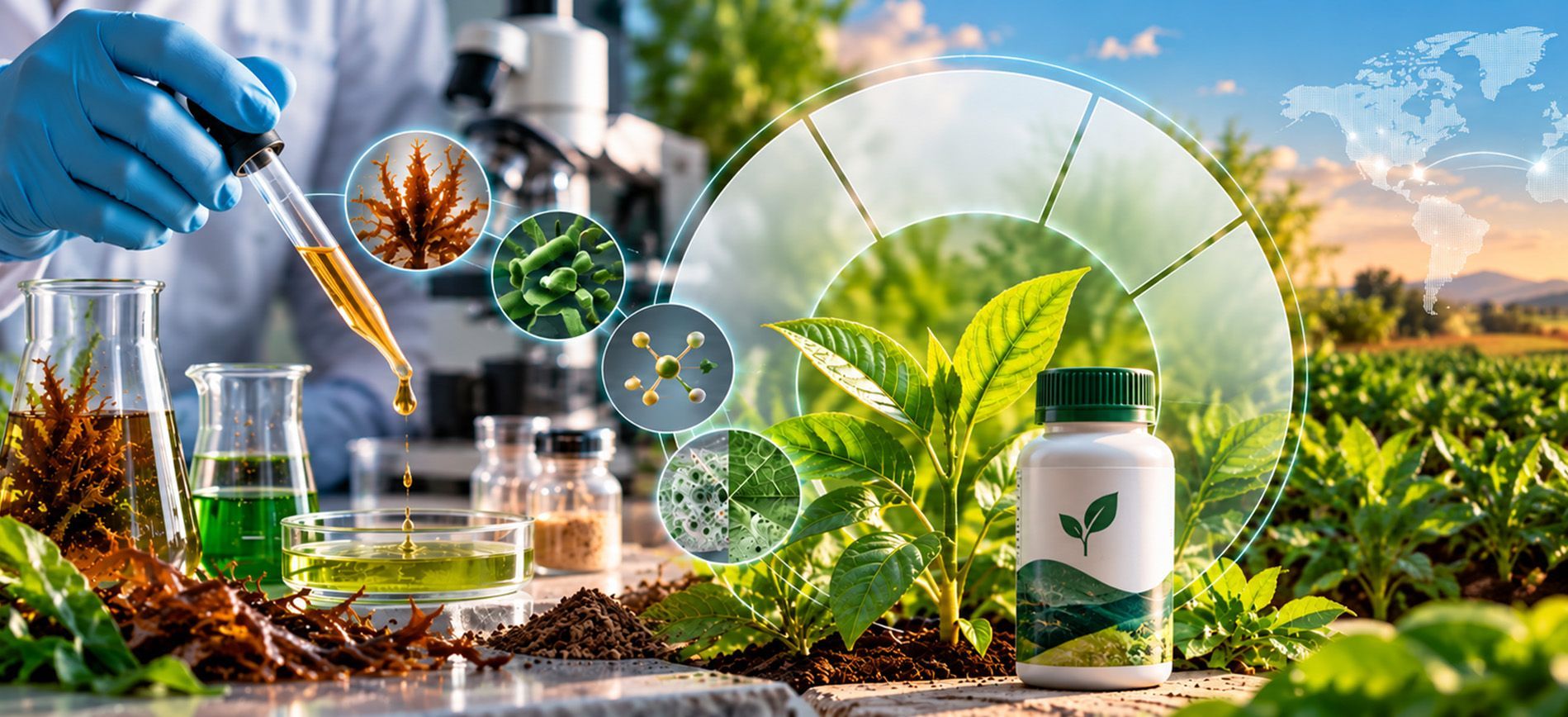
Plant biostimulants represent a diverse category of agricultural inputs.
Common product groups include:
- Seaweed extracts
- Humic and fulvic substances
- Protein hydrolysates
- Amino-acid-based formulations
- Microbial biostimulants
- Chitosan and other biopolymers
These products may be used in field crops, horticulture, orchards, greenhouse production, and other agricultural systems.
Their intended functions commonly include nutrient use efficiency, abiotic stress tolerance, crop quality, or nutrient availability.
However, product definitions and regulatory classifications vary by country.
This creates an important challenge when interpreting market statistics.
Market-size estimates from different research organizations may not be directly comparable because they can use different product definitions, geographic coverage, and forecasting assumptions.
For this reason, commercial analysis should distinguish verified sales data from forecasts and industry estimates.
2. Key Drivers of Market Development
Several structural factors support interest in plant biostimulants.
Increasing Pressure on Agricultural Productivity
Agricultural producers face continuing pressure to improve productivity while managing input costs.
Fertilizer prices, energy costs, irrigation expenses, and labor requirements can influence farm profitability.
Biostimulants may provide additional value when they improve specific crop responses under suitable conditions.
However, their economic contribution must be evaluated against application costs and actual field performance.
Nutrient Use Efficiency
Improving nutrient use efficiency is an important agricultural objective.
Biostimulants may influence processes related to nutrient acquisition, use, or availability.
This has sparked interest in integrating them with conventional fertilizer programs.
Nevertheless, biostimulants should not automatically replace essential plant nutrients.
Their role depends on product characteristics, crop requirements, and the surrounding management system.
Climate-Related Agricultural Stress
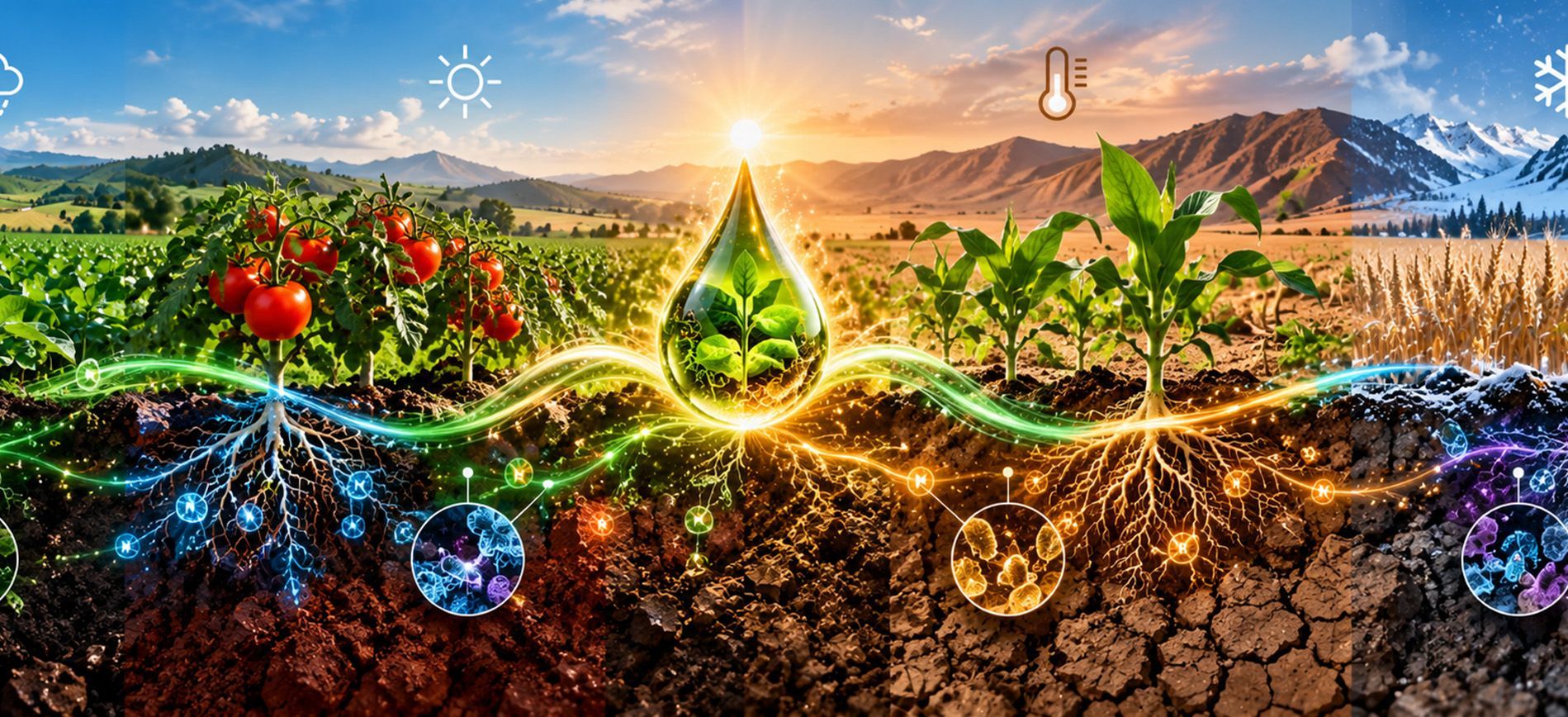
Drought, salinity, temperature extremes, and other environmental stresses can limit agricultural productivity.
Some biostimulants have demonstrated beneficial responses under particular experimental conditions.
However, performance is not universal.
When selecting a product, consider the specific stress, crop, application timing, and available evidence.
Interest in Sustainable Agriculture
Governments, agricultural businesses, and consumers increasingly emphasize efficient resource use and environmental performance.
This creates opportunities for products that can demonstrate measurable agronomic benefits.
However, environmental claims should be supported by appropriate evidence, not inferred solely from a product's biological or natural origin.
3. Major Commercial Product Segments
Different biostimulant categories offer different commercial characteristics.
| Product Category | Commercial Characteristics | Important Considerations |
|---|---|---|
| Seaweed extracts | Established presence in specialty crop programs | Raw-material variability and extraction methods |
| Humic and fulvic substances | Used in soil and nutrient-management programs | Analytical methods and product composition |
| Protein hydrolysates | Interest in plant nutrition and stress-management applications | Amino-acid and peptide composition |
| Microbial biostimulants | Potential applications involving plant–microbe interactions | Strain identity, viability, and storage |
| Chitosan and biopolymers | Specialized formulations with biological activity | Molecular characteristics and formulation stability |
Each category's commercial attractiveness depends on manufacturing costs, product differentiation, distribution requirements, and demonstrated field value.
Products with transparent specifications and consistent quality may offer stronger opportunities for long-term distribution relationships.
4. Regional Market Opportunities
The potential for biostimulant commercialization varies across agricultural regions.
European Union
The European Union provides an important market for plant biostimulants.
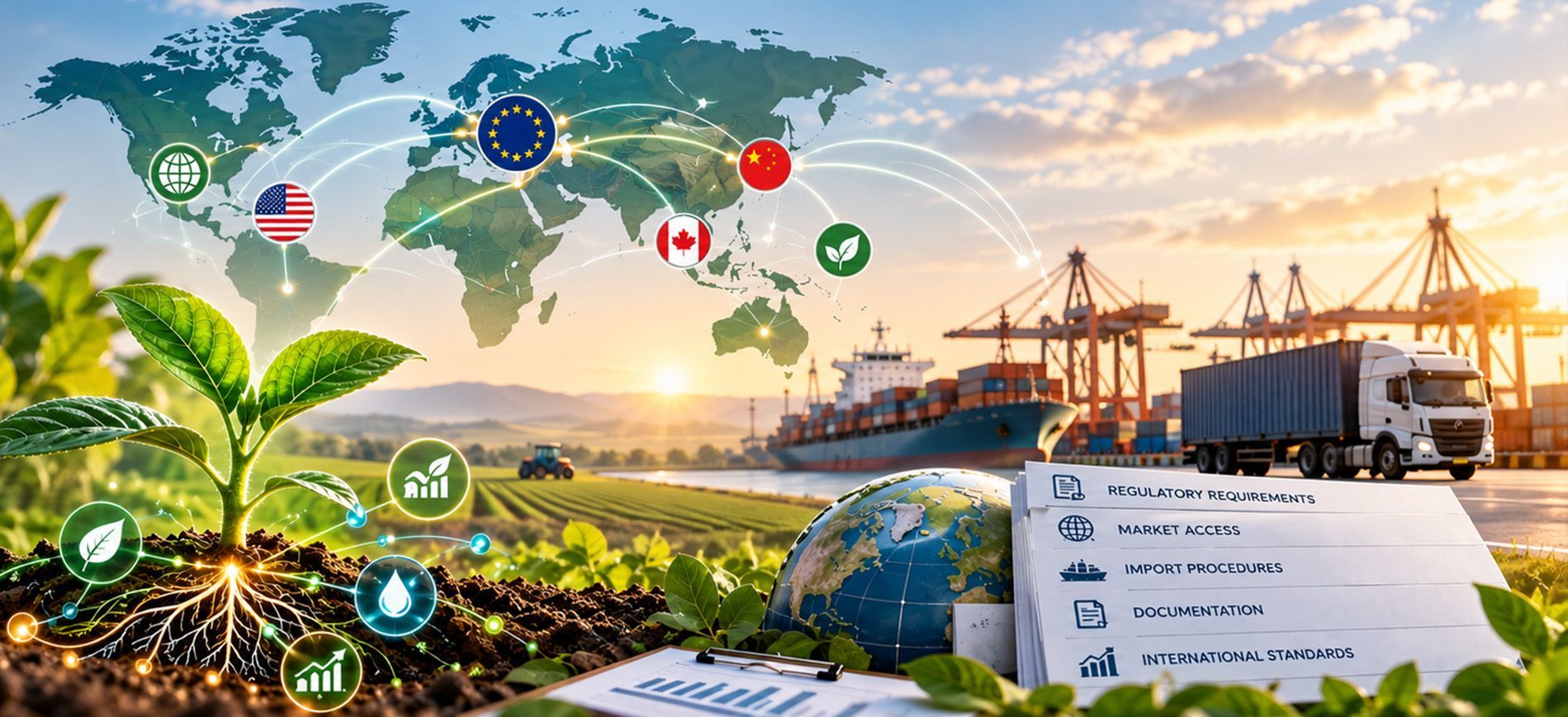
Regulation (EU) 2019/1009 establishes a harmonized framework for qualifying EU fertilizing products, including plant biostimulants.
This creates a structured regulatory pathway for eligible products.
However, compliance requires product classification, permitted components, safety requirements, labeling, and conformity assessment.
Regulatory readiness can therefore influence market-entry costs and supplier competitiveness.
Latin America
Latin America includes major agricultural producers with extensive field-crop and horticultural operations.
Countries such as Brazil offer commercial opportunities for agricultural inputs that improve production efficiency.
However, product registration, pricing, crop economics, and distribution networks matter.
Large agricultural markets do not automatically guarantee successful adoption of biostimulants.
Asia-Pacific
Asia-Pacific contains diverse agricultural systems, ranging from intensive horticulture to large-scale field-crop production.
Commercial opportunities may arise where biostimulants demonstrate value under local production conditions.
Market entry requires attention to national regulations, crop-specific requirements, and distribution structures.
Middle East and Africa
Water limitations, salinity, and challenging growing conditions create interest in agricultural technologies that may improve resource efficiency.
However, distributors must demonstrate biostimulant effectiveness under these conditions rather than assume it.
For distributors, local field validation and reliable technical support matter most.
Evaluate regional opportunity through crop economics, regulatory feasibility, distribution access, and verified product performance—not agricultural market size alone.
5. The Importance of Product Differentiation
As more manufacturers enter the industry, product differentiation becomes increasingly important.
Commercial differentiation can involve:
- Defined raw-material sources
- Consistent manufacturing processes
- Verified composition
- Product stability
- Crop-specific recommendations
- Credible field-trial evidence
- Regulatory documentation
- Technical support
Marketing claims alone may provide limited long-term competitive advantage.
A supplier that can demonstrate consistent quality and reproducible benefits may be better positioned to build lasting relationships with agricultural distributors.
This is especially relevant in markets where buyers have access to numerous products with similar descriptions.
6. Distribution and Market-Entry Challenges
Biostimulants present different commercial challenges from conventional commodity fertilizers.
Commodity fertilizers are commonly traded using relatively standardized nutrient and physical specifications.
Biostimulants often require more detailed technical evaluation.
Distributors may need to explain:
- The product's intended function
- Suitable crops and application methods
- Recommended timing
- Compatibility considerations
- Expected limitations
- Supporting scientific evidence
This increases the importance of technical sales capabilities.
Demonstration Trials
Local demonstration trials can help distributors assess a product's suitability.
However, demonstrations should not be confused with rigorous efficacy trials.
Reliable evaluations require appropriate controls, relevant measurements, and sufficient experimental design.
Storage and Logistics
Some formulations require particular storage conditions.
Microbial products may be sensitive to temperature and storage duration, while certain liquid formulations may face stability challenges.
Distribution planning should therefore account for shelf life, packaging, and transportation conditions.
7. Pricing and Return on Investment
Evaluate biostimulant pricing based on delivered agronomic value rather than product price alone.
Consider a hypothetical treatment:
- Product and application cost: USD 45 per hectare
- Crop revenue without treatment: USD 2,500 per hectare
- Crop revenue with treatment: USD 2,600 per hectare
Additional revenue: USD 100 per hectare.
After deducting the treatment cost, the net benefit would be:
USD 100 − USD 45 = USD 55 per hectare
The benefit-to-cost ratio, expressed as incremental revenue divided by treatment cost, would be approximately:
2.22
The corresponding net return on treatment cost would be approximately:
122%
These figures are illustrative, not observed field-trial results.
Actual profitability depends on crop prices, treatment costs, application expenses, and the reliability of the agronomic response.
For commercial buyers, repeated performance across relevant conditions is generally more informative than a single successful demonstration.
8. Scientific Evidence as a Competitive Advantage
Scientific credibility is becoming increasingly important for the biostimulant industry.
Research has demonstrated that certain biostimulant categories can influence plant physiological processes.
However, the magnitude and consistency of these effects vary.
A meta-analysis by Li, Van Gerrewey, and Geelen (2022) examined biostimulant performance across agricultural studies and highlighted the importance of factors such as crop type, environmental conditions, and application methods.
This variability complicates universal product claims.
It also creates opportunities for manufacturers that can identify where their products perform reliably.
Commercial development should therefore focus on:
- Defined target crops
- Specific application conditions
- Appropriate dosage recommendations
- Relevant agronomic measurements
- Reproducible performance
- Transparent limitations
A product supported by credible evidence for a specific application may offer greater commercial value than one marketed with broad, unsupported claims.
9. Emerging Industry Trends
Several developments may influence the future of the biostimulant industry.
More Targeted Formulations
Manufacturers may increasingly develop products for specific crops, growth stages, or environmental conditions.
This approach could make application recommendations more relevant.
Integration with Precision Agriculture
Digital agriculture may support more targeted product selection and application.
Soil information, crop monitoring, and environmental data could help identify conditions where particular formulations are more likely to provide value.
Improved Quality Standardization
Better analytical methods and manufacturing controls may improve product consistency.
This is especially important for biologically derived materials with variable composition.
Greater Regulatory Scrutiny
As the market develops, suppliers may face increasing expectations concerning safety, labeling, documentation, and substantiation of claims.
Stronger Distributor Technical Capabilities
Distributors may increasingly compete through agronomic expertise, product verification, and customer support rather than price alone.
These developments represent potential industry directions, not guaranteed outcomes.
10. Commercial Strategy for Fertilizer Trading Companies
For established fertilizer trading businesses, biostimulants may offer opportunities to expand beyond conventional commodity products.
However, entering this market requires a different commercial approach.
A practical strategy should begin with identifying customer demand and evaluating the technical and regulatory suitability of potential products.
Important considerations include:
Supplier reliability: Can the manufacturer consistently meet specifications and provide appropriate documentation?
Product differentiation: Does the formulation offer a credible advantage over competing products?
Market suitability: Are the intended crops and agricultural conditions appropriate for the product?
Regulatory feasibility: Can the product legally enter the destination market?
Commercial economics: Can the distributor achieve a sustainable margin while delivering measurable value to customers?
Technical support: Can the supplier and distributor explain the product's application requirements and limitations?
For companies such as Green Gubre Group, biostimulants may represent a potential area for future portfolio diversification.
However, any expansion should follow a structured assessment of supplier capabilities, customer demand, regulatory requirements, and commercial viability.
Conclusion
The plant biostimulant industry presents opportunities driven by interest in nutrient efficiency, agricultural resilience, and more sustainable production systems.
However, commercial success depends on more than market growth expectations.
Manufacturers and distributors must address product variability, regulatory differences, quality assurance, technical support, and inconsistent field responses.
For international agricultural businesses, the strongest opportunities are likely to involve products supported by transparent specifications, credible scientific evidence, and clearly defined agricultural applications.
Rather than relying on broad market forecasts or universal performance claims, commercial decisions should focus on verified customer needs and realistic economic value.
The long-term development of the biostimulant market will depend on the industry's ability to translate scientific potential into reliable agricultural and commercial performance.
References
- European Parliament and Council (2019). Regulation (EU) 2019/1009 — EU Fertilizing Products Regulation.
- du Jardin, P. (2015). Plant Biostimulants: Definition, Concept, Main Categories and Regulation. Scientia Horticulturae, 196, 3–14.
- Rouphael, Y. & Colla, G. (2020). Biostimulants in Agriculture. Frontiers in Plant Science, 11, 40.
- Li, J., Van Gerrewey, T. & Geelen, D. (2022). A Meta-Analysis of Biostimulant Yield Effectiveness in Field Trials. Frontiers in Plant Science, 13, 836702.
- Ricci, M., Tilbury, L., Daridon, B., & Sukalac, K. (2019). General Principles to Justify Plant Biostimulant Claims. Frontiers in Plant Science, 10, 494.