Plant Biostimulant Quality Control: How to Evaluate Product Composition, Stability, and Reliability
Plant Biostimulant Quality Control:
How to Evaluate Product Composition, Stability, and Reliability
Introduction
The growing availability of plant biostimulants creates new opportunities for agriculture but also challenges for product selection and quality assurance.
Two biostimulants marketed under the same category may differ significantly in composition, concentration, stability, manufacturing consistency, and biological performance.
For example, seaweed extracts produced from different species or extraction methods may contain different chemical profiles. Similarly, microbial biostimulants containing the same microbial species may differ in strain characteristics, viable concentration, and shelf life.
These differences matter because product quality can influence reliability throughout manufacturing, storage, transportation, and agricultural application.
For growers, distributors, and importers, the essential question is:
How can growers, distributors, and importers evaluate a plant biostimulant before it enters a commercial crop-management program?
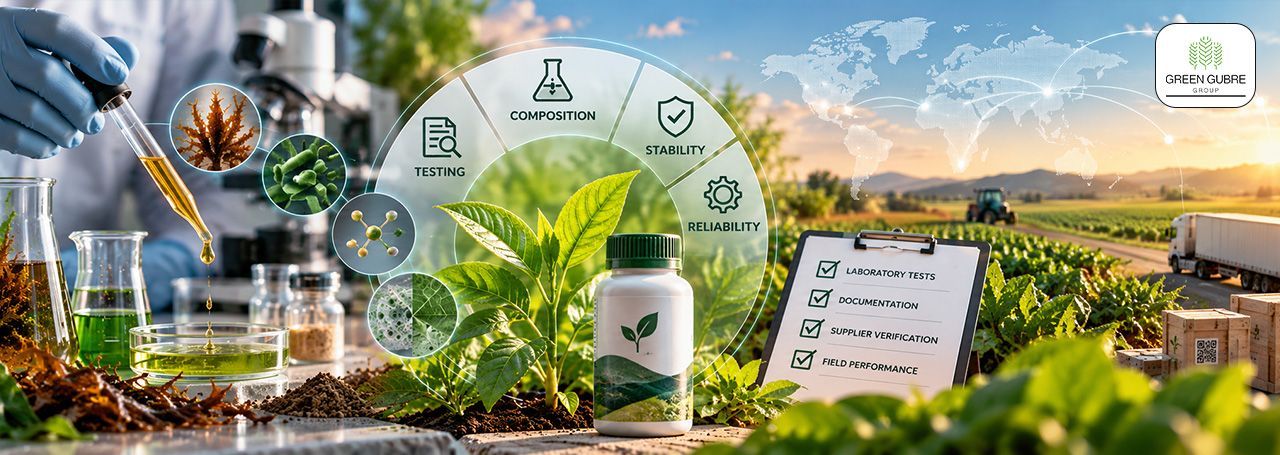
This article explains the principal quality-control parameters, laboratory tests, documentation requirements, and supplier-verification procedures used to evaluate plant biostimulants.
1. What Defines a High-Quality Plant Biostimulant?
Plant biostimulant quality involves three distinct elements:
Product quality: The formulation consistently meets its declared physical, chemical, and biological specifications.
Product safety: The material complies with applicable requirements concerning contaminants, microorganisms, and safe handling.
Product efficacy: Appropriate scientific evidence supports its intended agronomic function.
These elements are related but should not be confused.
A product may meet its laboratory specifications without demonstrating improved crop performance. Likewise, promising experimental results do not eliminate the need for consistent manufacturing and contamination control.
Under Regulation (EU) 2019/1009, plant biostimulants are defined as substances that stimulate plant nutrition processes independently of nutrient content, with the objective of improving specified plant or rhizosphere characteristics.
Consequently, biostimulant quality assessment must consider both
the product's composition and its intended purpose.
2. Raw-Material Quality and Traceability
Quality control begins with raw-material selection.
Biostimulants may originate from seaweed, plant proteins, organic deposits, microorganisms, or other biological materials.
Their characteristics can vary according to:
- Geographic origin and biological source
- Harvesting or collection conditions
- Seasonal variation
- Processing and extraction methods
- Storage and transportation
- Potential contamination
Manufacturers should maintain records identifying raw-material suppliers, batch numbers, specifications, and relevant analytical results.
Traceability is especially important when biological materials naturally vary between production batches.
For commercial buyers, descriptions such as natural extract or organic-based formulation do not replace technical specifications.
A reliable supplier should be able to explain the material's origin and relevant characteristics.
3. Quality Parameters for Different Biostimulant Categories
Different biostimulant categories require different analytical approaches.
Seaweed Extracts
Seaweed-extract quality can depend on the seaweed species, harvesting conditions, extraction technology, and formulation.
Relevant parameters may include:
- Raw-material species
- Total solids and organic matter
- pH and density
- Electrical conductivity
- Relevant chemical markers
- Contaminant levels
- Physical stability
Two products with similar total solids may still differ in chemical composition and biological activity.
Therefore, total solids alone cannot establish product equivalence.
Humic and Fulvic Substances
Humic and fulvic products may differ by source, extraction process, and purification.
Important specifications can include:
- Humic-substance content
- Fulvic-substance content
- Moisture and ash
- pH
- Solubility
- Insoluble residue
- Relevant contaminants
The analytical method matters because different procedures may produce results that aren't directly comparable.
Protein Hydrolysates and Amino Acids
Protein hydrolysates contain mixtures of amino acids, peptides, and other compounds.
Their composition depends on the protein source and hydrolysis process.
Relevant measurements may include:
- Total nitrogen
- Organic nitrogen
- Free amino acids
- Amino-acid profile
- Peptide characteristics
- Degree of hydrolysis
- pH and solubility
Total nitrogen concentration alone does not fully describe the quality or biological characteristics of a protein hydrolysate.
Chitosan and Biopolymers
Chitosan formulations may require evaluation of molecular weight, degree of deacetylation, viscosity, concentration, solubility, and purity.
These characteristics can influence formulation behavior and biological interactions.
Therefore, a declared chitosan concentration provides only part of the technical picture.
4. Microbial Biostimulant Quality Control
Microbial biostimulants require additional controls because they contain living organisms.
Their effectiveness may depend on whether those organisms remain viable during storage, mixing, transportation, and application.
Important quality parameters include:
- Microbial species and strain identity
- Viable microorganism concentration
- Purity and contamination
- Formulation stability
- Storage temperature
- Shelf life
- Compatibility with agricultural inputs
Measuring Microbial Viability
Microbial concentration is commonly reported using colony-forming units (CFU), where appropriate for the organism and method.
For example:
1 × 10⁸ CFU/g
However, CFU measurements depend on culture conditions and may not capture all viable organisms.
Alternative or complementary methods may be required for particular microorganisms.
Why Strain Identity Matters
Two microorganisms belonging to the same species may differ in root-colonization ability, environmental tolerance, or nutrient-related activity.
For this reason, identifying the microbial strain matters when evaluating biological performance.
Shelf-Life Viability
A microbial product may meet its declared concentration immediately after manufacturing but lose viability during storage.
Temperature, moisture, oxygen exposure, packaging, and storage duration can influence survival.
Manufacturers should therefore support shelf-life claims with appropriate stability data.
5. Product Stability and Shelf Life
Product stability determines whether a formulation maintains its required characteristics throughout its intended commercial life.
Potential stability problems include:
- Sedimentation or phase separation
- Precipitation and crystallization
- Changes in pH or viscosity
- Degradation of relevant components
- Microbial contamination
- Loss of microbial viability
- Packaging deterioration
Some formulations require shaking or agitation before use. Consequently, visible sedimentation does not automatically indicate a defective product.
The relevant question is whether the formulation remains within its validated specifications.
Stability Testing
Manufacturers may conduct real-time and, where appropriate, accelerated stability studies.
Testing can evaluate physical appearance, chemical characteristics, microbial viability, and packaging integrity under defined conditions.
Commercial buyers should verify the recommended storage temperature, shelf life, and any restrictions concerning freezing, heat, or direct sunlight.
These requirements are especially important during international transportation.
6. Contaminants and Product Safety
Natural origin does not automatically guarantee product safety.
Depending on raw materials and manufacturing processes, biostimulants may require testing for:
- Heavy metals
- Undesirable microorganisms
- Residual processing chemicals
- Excessive salts
- Other relevant contaminants
Potentially harmful elements may include cadmium, lead, arsenic, mercury, and other metals, depending on the applicable regulatory framework.
The appropriate testing program depends on product composition, intended use, and destination market.
For EU fertilizing products,
Regulation (EU) 2019/1009 sets requirements for safety, component materials, labeling, and conformity assessment.
Importantly, regulatory compliance is market-specific.
A product permitted in one country may require additional registration, documentation, or authorization elsewhere.
7. Essential Quality Documents for Buyers
Professional buyers should request appropriate technical documentation before purchasing commercial quantities.
Three documents are particularly important.
Certificate of Analysis (COA)
A COA reports analytical results for specified parameters and is commonly associated with an identified production batch.
It may include:
- Product and manufacturer identification
- Batch number
- Testing date
- Analytical parameters
- Test results
- Specification limits
- Authorized approval
A batch-specific COA helps verify whether the supplied material meets declared specifications.
However,
a COA does not automatically prove agronomic efficacy.
Technical Data Sheet (TDS)
A TDS describes relevant product characteristics and technical recommendations.
It may include composition, application methods, recommended rates, compatibility information, and storage requirements.
Safety Data Sheet (SDS)
An SDS provides hazard and safe-handling information where required under the applicable chemical safety framework.
These documents serve different purposes and should not be treated as interchangeable.
Independent Laboratory Testing
Independent testing can provide additional confidence, particularly for unfamiliar suppliers or high-value purchases.
Laboratories accredited under
ISO/IEC 17025
may offer assurance of technical competence for tests included within their accreditation scope.
Representative sampling remains essential because even accurate laboratory analysis cannot compensate for a poorly collected sample.
8. Supplier Evaluation and International Procurement
Biostimulant quality assurance should extend beyond the manufacturing facility.
Storage, packaging, transportation, and distribution can affect product integrity.
Before purchasing, importers and distributors should evaluate the manufacturer's technical capability and the product's suitability for the destination market.
A practical supplier-verification process includes:
Step 1 — Verify the manufacturer. Confirm the producer's identity, manufacturing capability, and product traceability.
Step 2 — Review technical specifications. Evaluate composition, relevant analytical methods, and declared quality parameters.
Step 3 — Examine quality documents. Request appropriate COAs, technical information, and safety documentation.
Step 4 — Verify stability. Confirm shelf life, storage conditions, and packaging requirements.
Step 5 — Review regulatory status. Check applicable registration, labeling, and import requirements.
Step 6 — Evaluate efficacy evidence. Review field trials or other relevant studies supporting the intended agronomic claims.
Step 7 — Verify critical specifications. Arrange independent testing where commercially justified.
This approach can reduce procurement uncertainty and improve supply-chain reliability.
9. Quality Control vs. Agronomic Performance
One of the most important distinctions in biostimulant evaluation is the difference between analytical quality and field performance.
A laboratory can confirm that a product contains specified ingredients or meets defined physical and chemical requirements.
However, it cannot establish that the product will consistently increase yield or improve nutrient use efficiency under every agricultural condition.
Agronomic performance may depend on:
- Crop species and variety
- Soil characteristics
- Climate
- Nutrient status
- Application method
- Application timing
- Environmental stress
- Farm-management practices
As discussed in
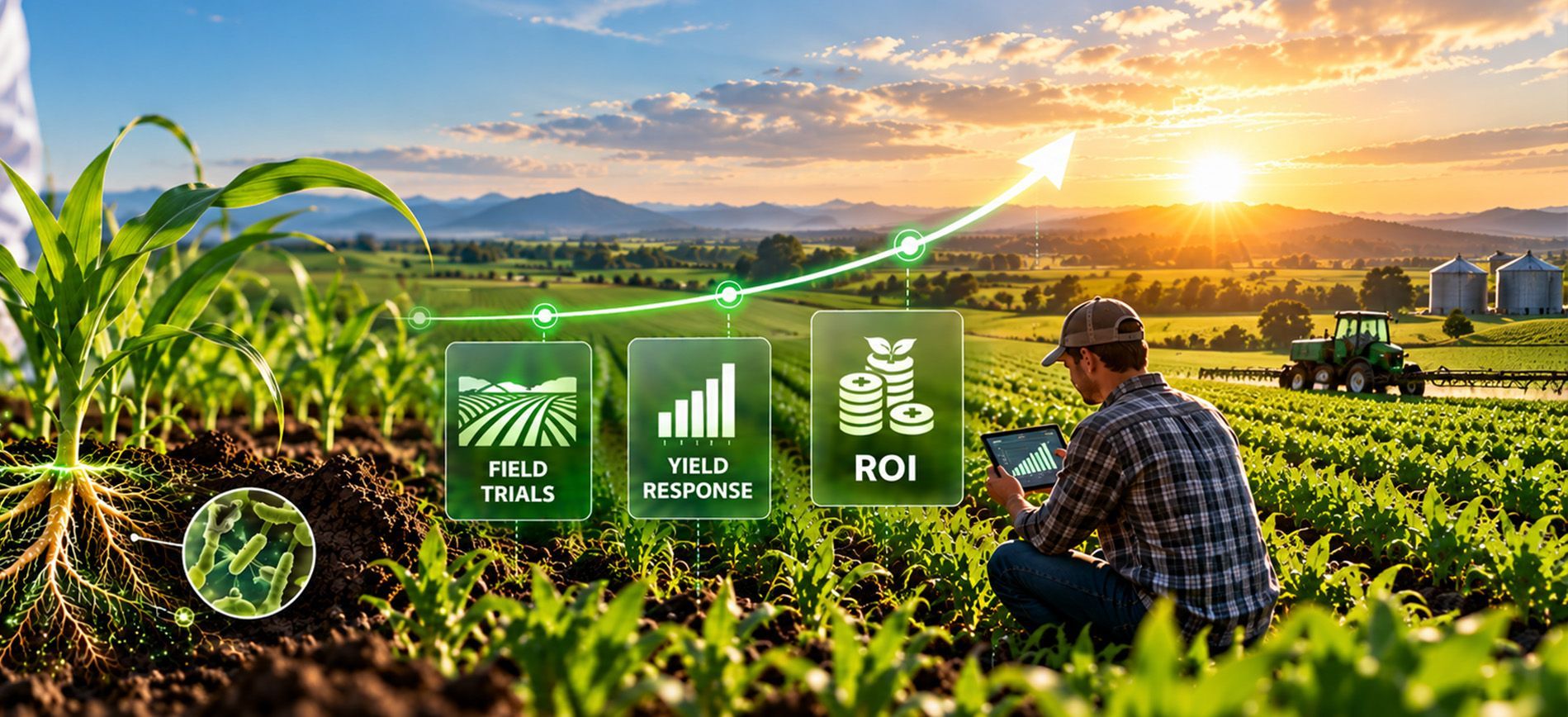
Blog 330, reliable performance evaluation requires appropriate field-trial design, control treatments, replication, and relevant measurements.
Similarly,
Blog 331 explains why biostimulant responses can vary across production environments.
Quality control and agronomic evaluation should therefore complement one another.
A strong product-quality system establishes manufacturing reliability, while credible field evidence supports the product's intended agricultural function.
10. The Economic Value of Product Quality
Quality assurance involves costs such as laboratory testing, documentation, supplier audits, and stability studies.
However, poor product quality can create greater commercial losses.
Potential consequences include:
- Shipment rejection
- Product deterioration
- Reduced biological activity
- Customer complaints
- Regulatory problems
- Product recalls
- Reputational damage
Consider two hypothetical suppliers.
Supplier A
Product price: USD 2.00 per liter
Limited technical documentation
Unverified shelf life
Supplier B
Product price: USD 2.50 per liter
Defined specifications
Batch-specific COA
Documented stability
Relevant efficacy evidence
The lower purchase price does not automatically make Supplier A the better commercial choice.
The buyer should evaluate total delivered cost, effective application rate, reliability, storage risk, regulatory compliance, and expected agricultural value.
For distributors and importers, consistent product quality can be an important competitive advantage.
11. The Future of Biostimulant Quality Assurance
As the biostimulant industry develops, quality-control systems are likely to become increasingly sophisticated.
Potential advances include:
- Improved chemical fingerprinting
- More precise microbial identification
- Molecular analytical techniques
- Standardized testing methods
- Digital batch traceability
- Automated quality monitoring
- Better stability prediction
- Stronger links between product composition and biological performance
One important scientific challenge is identifying measurable product characteristics that reliably predict agronomic functionality.
Improved analytical characterization could help manufacturers distinguish meaningful quality indicators from specifications that provide limited information about biological performance.
Digital traceability may also link manufacturing batches to laboratory results, distribution records, and field observations.
The long-term objective is to establish a clearer relationship between:
Raw-Material Quality → Manufacturing Consistency → Product Stability → Biological Function → Field Performance
Conclusion
Plant biostimulant quality control requires more than verifying a declared concentration or reviewing a product label.
Reliable evaluation should consider raw-material identity and composition, manufacturing consistency, analytical specifications, stability, microbial viability (where applicable), contamination, and regulatory compliance.
Certificates of Analysis, Technical Data Sheets, Safety Data Sheets, and independent laboratory testing can support professional procurement decisions.
However, product quality and agronomic efficacy remain separate considerations.
A formulation may meet its specifications without producing the same crop response under every condition.
For growers, importers, and distributors, three questions should guide product evaluation:
Is the product consistently manufactured?
Is it safe and compliant with applicable requirements?
Is its intended agronomic benefit supported by credible evidence?
Answering these questions helps transform biostimulant purchasing from a price-based transaction into a more reliable technical and commercial decision.
For the agricultural industry, the future of plant biostimulants will depend increasingly on
transparent specifications, credible scientific evidence, and consistent product reliability.
References
- European Parliament and Council (2019). Regulation (EU) 2019/1009 — EU Fertilizing Products Regulation.
- du Jardin, P. (2015). Plant Biostimulants: Definition, Concept, Main Categories and Regulation. Scientia Horticulturae, 196, 3–14.
- Rouphael, Y. & Colla, G. (2020). Biostimulants in Agriculture. Frontiers in Plant Science, 11, 40.
- Ricci, M., Tilbury, L., Daridon, B. & Sukalac, K. (2019). General Principles to Justify Plant Biostimulant Claims. Frontiers in Plant Science, 10, 494.
- Calvo, P., Nelson, L. & Kloepper, J.W. (2014). Agricultural Uses of Plant Biostimulants. Plant and Soil, 383, 3–41.
- International Organization for Standardization. ISO/IEC 17025:2017 — General Requirements for the Competence of Testing and Calibration Laboratories.