Biofortified Fertilizers – Enhancing Crop Nutrition for Human Health
Biofortified Fertilizers – Enhancing Crop Nutrition for Human Health
Introduction: Linking Soil Health to Human Health
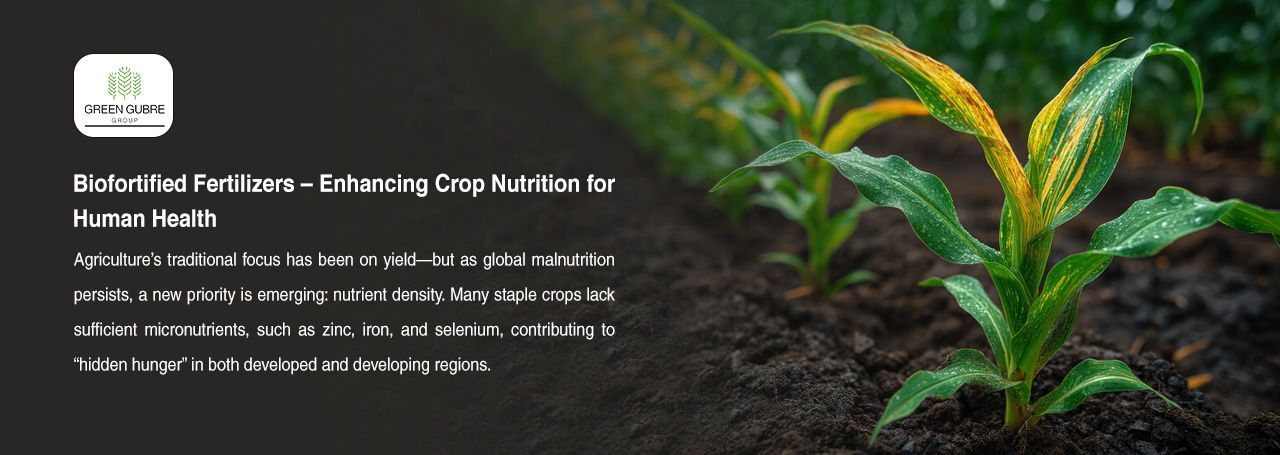
Agriculture’s traditional focus has been on yield—but as global malnutrition persists, a new priority is emerging: nutrient density. Many staple crops lack sufficient micronutrients, such as zinc, iron, and selenium, contributing to “hidden hunger” in both developed and developing regions.
Biofortified fertilizers are specially designed nutrient blends that not only nourish crops but also boost the nutritional content of harvested food. This blog explores how they serve as a powerful tool in closing the gap between agricultural output and human dietary needs.
What Are Biofortified Fertilizers?
Biofortified fertilizers are enriched with micronutrients critical to both plant development and human nutrition. These fertilizers aim to:
- Improve uptake of nutrients like zinc (Zn), iron (Fe), selenium (Se), iodine (I), and boron (B)
- Increase the nutrient concentration in edible parts (grain, tuber, fruit)
- Deliver
agronomic biofortification through foliar spray, soil application, or fertigation
They do not genetically modify the plant but instead optimize soil-plant nutrient interactions to enhance food value.
Key Micronutrients for Biofortification
| Micronutrient | Role in Plants | Human Health Benefit |
|---|---|---|
| Zinc (Zn) | Enzyme activation, growth | Immune function, child development |
| Iron (Fe) | Chlorophyll synthesis | Prevents anemia |
| Selenium (Se) | Antioxidant activity | Thyroid function, immunity |
| Iodine (I) | Not essential for plants | Brain development, metabolism |
| Boron (B) | Cell wall integrity | Bone health, hormone regulation |
How Biofortified Fertilizers Are Applied
There are three primary methods:
- Soil Application – Micronutrient-enriched granular fertilizers blended with NPK
- Foliar Spray – Chelated micronutrients like Zn-EDTA or Fe-DTPA are sprayed onto leaves.
- Seed Priming or Coating – Micronutrient-treated seeds to improve early-stage nutrition
Each strategy is tailored to the crop type, soil status, and regional nutrient deficiencies.
Best Crops and Regions for Biofortification
Biofortified fertilizers are especially effective for:
- Cereals (e.g., wheat, rice, maize) in South Asia and Africa
- Root crops (e.g., potato, cassava) in Latin America
- Pulses and legumes in alkaline or low-Zn soils
- Vegetables and fruits with high market value or export standards
Case Studies and Results
- India: Foliar zinc raised Zn concentration in wheat grain by up to 40%
- Finland: Nationwide selenium-biofortified potatoes reduced population Se deficiency
- Bangladesh: Iron-fortified rice enhanced nutritional intake in rural communities
These real-world outcomes demonstrate that fertilizer can serve as a public health tool.
Green Gubre Group’s Biofortified Fertilizer Portfolio
We offer a full range of biofortified solutions:
- Zinc-Enriched NPKs – Ideal for cereals and legumes
- Chelated Micronutrient Sprays – Targeted foliar efficiency
- Selenium-Coated Urea & SOP – For regions with Se-deficient soils
- Custom Biofortification Services – Based on WHO/FAO nutritional gaps and local crop needs
Conclusion: Fertilizing for a Healthier Future
Biofortified fertilizers are more than farm inputs—they’re part of the solution to global malnutrition. By enriching staple crops with critical micronutrients, growers not only improve yield but also nourish communities.
At Green Gubre Group, our mission is to help farmers
grow better and feed smarter—with every harvest contributing to both productivity and public health.