Chloride-Free Fertilizers – Protecting Sensitive Crops and Maximizing Yield Quality
Chloride-Free Fertilizers – Protecting Sensitive Crops and Maximizing Yield Quality
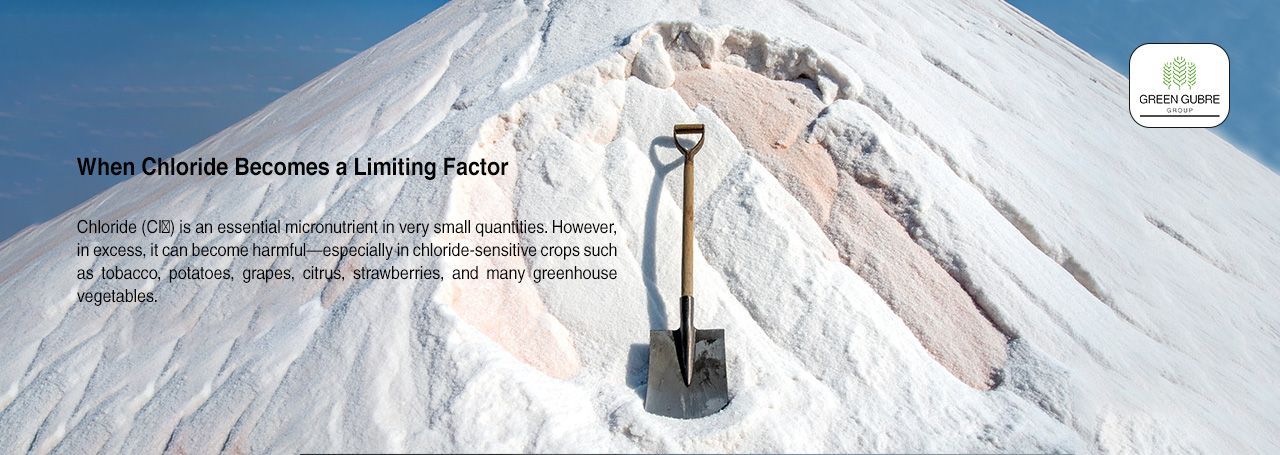
Introduction: When Chloride Becomes a Limiting Factor
Chloride (Cl⁻) is an essential micronutrient in very small quantities. However, in excess, it can become harmful—especially in chloride-sensitive crops such as tobacco, potatoes, grapes, citrus, strawberries, and many greenhouse vegetables.
In modern intensive agriculture, particularly under fertigation and drip irrigation systems, chloride accumulation in the root zone can reduce nutrient uptake, lower fruit quality, and lead to long-term soil salinity issues.
This is where
chloride-free fertilizers play a critical role. By replacing high-chloride sources such as muriate of potash (MOP) with sulfate-based or nitrate-based alternatives, growers can improve crop quality, reduce salinity stress, and protect long-term soil health.
Understanding Chloride Sensitivity in Crops
While some crops tolerate chloride well (e.g., wheat, barley), others are highly sensitive.
Common Chloride-Sensitive Crops
| Crop | Chloride Impact |
|---|---|
| Potato | Reduced starch content, tuber quality decline |
| Tobacco | Poor burning quality and leaf damage |
| Grape | Reduced sugar content, leaf burn |
| Strawberry | Lower fruit firmness |
| Citrus | Leaf tip burn, yield reduction |
| Avocado | Severe salt sensitivity |
High chloride levels can:
- Increase osmotic stress
- Interfere with nitrate uptake.
- Reduce sugar accumulation
- Lower fruit shelf life
- Increase soil electrical conductivity (EC)
According to FAO salinity management guidelines, chloride buildup is a major concern in irrigated agriculture.
Common High-Chloride vs Chloride-Free Fertilizers
| Fertilizer | Chloride Content | Alternative |
|---|---|---|
| MOP (KCl) | High | SOP (K₂SO₄) |
| Ammonium Chloride | High | Ammonium Sulfate |
| Potassium Chloride Blends | High | Potassium Nitrate |
| Low-Grade NPK with KCl | Moderate–High | Chloride-Free NPK |
Chloride-Free Alternatives
- Potassium Sulfate (SOP)
- Potassium Nitrate (KNO₃)
- Calcium Nitrate
- Magnesium Sulfate
- Sulfate-based NPK blends
Sulfate-based fertilizers not only reduce chloride stress but also supply essential sulfur, improving protein formation.
Benefits of Chloride-Free Fertilizers
- Improved Fruit Quality: Higher sugar content and better coloration in grapes and citrus.
- Better Storage and Shelf Life: Reduced tissue breakdown and improved firmness.
- Lower Soil Salinity: Reduced EC buildup in fertigation systems.
- Enhanced Nutrient Uptake: Less competition between chloride and nitrate ions.
- Improved Export Quality: Many export markets demand low-chloride fertilization practices for high-value crops.
Scientific research confirms that replacing MOP with SOP improves tuber quality and sugar content in chloride-sensitive crops.
When Should Farmers Choose Chloride-Free Fertilizers?
- Greenhouse production
- Drip irrigation systems
- Sandy or saline soils
- High-value fruit crops
- Export-oriented production
- Areas with limited rainfall (low leaching)
Chloride-free fertilization is particularly critical in controlled-environment agriculture.
Source: University of California ANR – Managing Salinity in Irrigated Agriculture
Green Gubre Group’s Chloride-Free Solutions
We offer a full portfolio of chloride-free fertilizers designed for sensitive crops:
- GreenSOP (Potassium Sulfate) – Premium K source without chloride
- GreenKNO₃ – Potassium nitrate for fertigation
- GreenCal Nitrate – Chloride-free calcium source
- GreenMag Sulfate – Magnesium + sulfur nutrition
- Chloride-Free NPK Blends – Customized formulations
All products include:
- COA & MSDS documentation
- Low EC technical data
- Crop-specific application charts
- Fertigation compatibility support
Conclusion: Quality Begins with the Right Potassium Source
While chloride is essential in trace amounts, excess chloride can compromise crop performance and soil health. Switching to chloride-free fertilizers is not just a soil management decision—it is a crop quality strategy.
In modern high-value agriculture, chloride-free nutrition improves fruit quality, reduces salinity stress, and protects long-term soil productivity.
At
Green Gubre Group, we design nutrient programs that protect sensitive crops while maximizing both yield and market value.