Calcium-Magnesium Fertilizers – Strengthening Plant Health from the Ground Up
Calcium-Magnesium Fertilizers – Strengthening Plant Health from the Ground Up
Introduction: Why Calcium and Magnesium Deserve More Attention
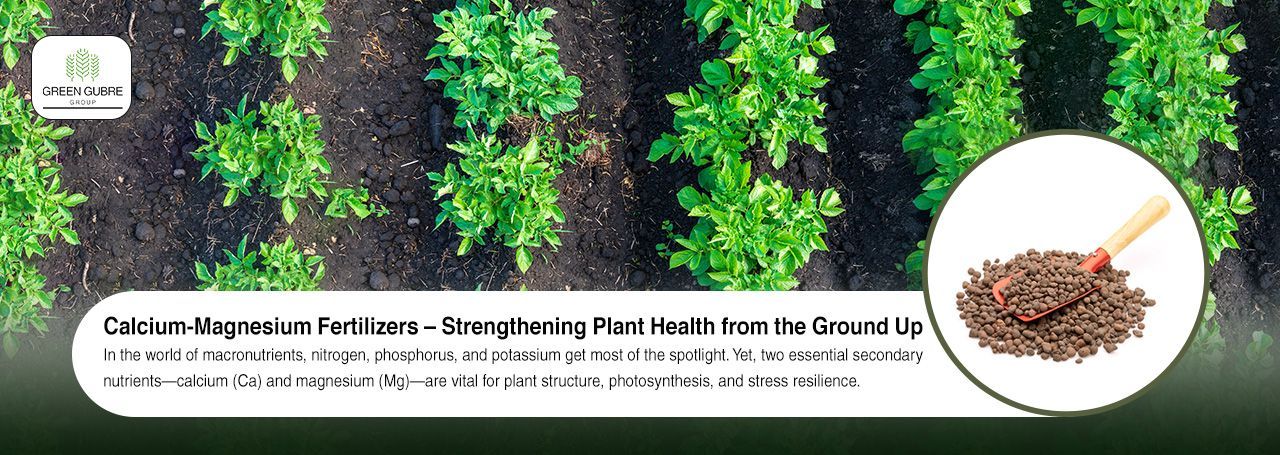
In the world of macronutrients, nitrogen, phosphorus, and potassium get most of the spotlight. Yet, two essential secondary nutrients—calcium (Ca) and magnesium (Mg)—are vital for plant structure, photosynthesis, and stress resilience. Deficiencies often go unnoticed until it’s too late, leading to poor root development, leaf curling, blossom-end rot, and weakened overall plant performance.
This blog dives into the critical roles of calcium and magnesium, common deficiency symptoms, effective fertilizer sources, and best practices for integrating these nutrients into modern nutrient management plans.
Why Calcium Matters for Plant Growth
Calcium is a structural nutrient that plays a key role in:
- Cell wall formation – supports rigidity and strength
- Root elongation and tip growth
- Nutrient transport within the plant
- Resistance to disease and abiotic stress
It is relatively immobile in plants, meaning a continuous supply is required—especially in fast-growing tissues like young leaves and fruits.
Common Deficiency Symptoms:
- Leaf tip burn (e.g., in lettuce)
- Blossom-end rot (tomatoes, peppers)
- Poor fruit set or early fruit drop
- Weak root systems
Why Magnesium Is Equally Important
Magnesium is the central atom in chlorophyll, making it directly responsible for capturing sunlight for photosynthesis. It also:
- Activates over 300 enzymes
- Supports carbohydrate transport from leaves to storage tissues
- Aids in protein synthesis and energy metabolism
Deficiency Symptoms:
- Interveinal chlorosis (yellowing between leaf veins)
- Older leaves are affected first
- Premature leaf fall in fruit trees
- Poor sugar accumulation in fruits and tubers
Best Calcium and Magnesium Fertilizer Options
| Fertilizer Type | Nutrient Content | Suitable Application |
|---|---|---|
| Calcium Nitrate | 15.5% N, 18.5% Ca | Fertigation, foliar |
| Dolomitic Lime | ~20% Ca, 10% Mg | Soil pH correction |
| Gypsum (Calcium Sulfate) | 22% Ca, 18% S | Soil application, saline soils |
| Magnesium Sulfate (Epsom) | 10% Mg, 13% S | Foliar, fertigation |
| Chelated Ca/Mg (EDTA/DTPA) | 5–10% | High-value crops, greenhouse |
Always choose the correct form based on your crop, soil pH, irrigation system, and speed of response needed.
Crop Sensitivity and Demand
Some crops are exceptionally responsive to Ca–Mg nutrition:
| Crop Type | Calcium Sensitivity | Magnesium Sensitivity |
|---|---|---|
| Tomato | High (blossom-end rot) | Medium (leaf chlorosis) |
| Lettuce | High (tip burn) | Low |
| Citrus | Medium (fruit drop) | High (fruit quality) |
| Potato | Medium | High (tuber yield) |
| Grape | Medium | Medium |
Understanding crop-specific needs ensures better fertilization efficiency and yield outcomes.
Green Gubre Group’s Calcium-Magnesium Solutions
At Green Gubre Group, we supply calcium and magnesium solutions tailored for open-field, greenhouse, and export-focused production systems:
- Calcium Nitrate – High-purity grade for fertigation and foliar
- Magnesium Sulfate – Fully water-soluble, for fast uptake
- Dolomitic Lime & Gypsum – Soil structure improvement and pH correction
- Chelated Ca–Mg Products – Formulated for sensitive or high-value crops
Every batch includes:
- Certificate of Analysis (COA)
- Compatibility charts for fertigation or foliar use
- Application recommendations based on crop and growth stage
Conclusion: Strengthen from Within
Your crop’s strength—both above and below ground—starts with adequate calcium and magnesium. By incorporating Ca–Mg fertilization into your nutrient plan, you’re not just correcting deficiencies; you’re laying the groundwork for stronger roots, healthier foliage, better fruit quality, and longer shelf life.
With
Green Gubre Group’s scientifically formulated Ca–Mg fertilizers, you feed your crops more precisely, sustainably, and profitably.