Climate-Smart Fertilization – 6 Practices for High Yield and Low Environmental Impact
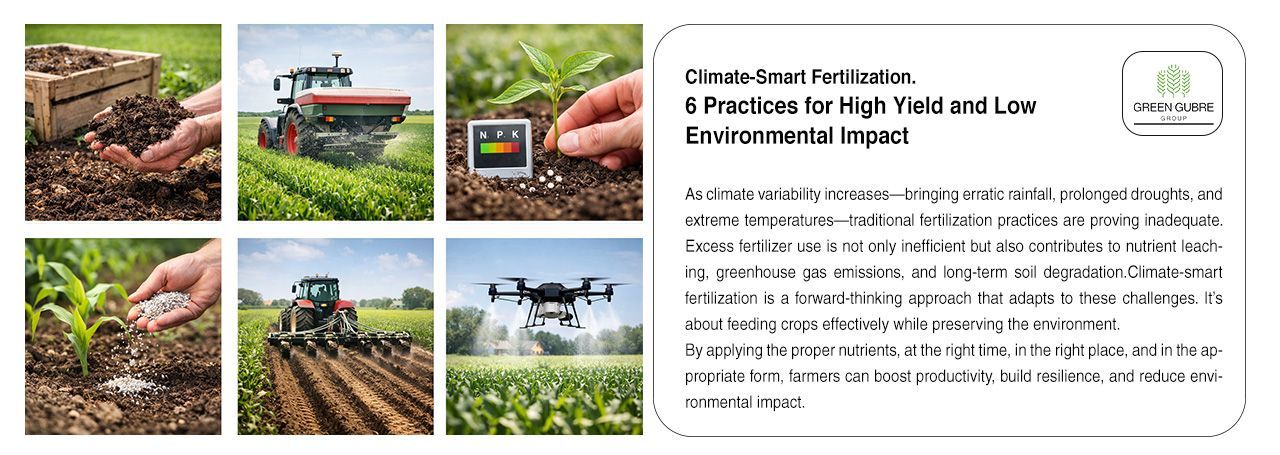
Climate-Smart Fertilization
6 Practices for High Yield and Low Environmental Impact
Introduction: Smarter Fertilization for a Changing Climate
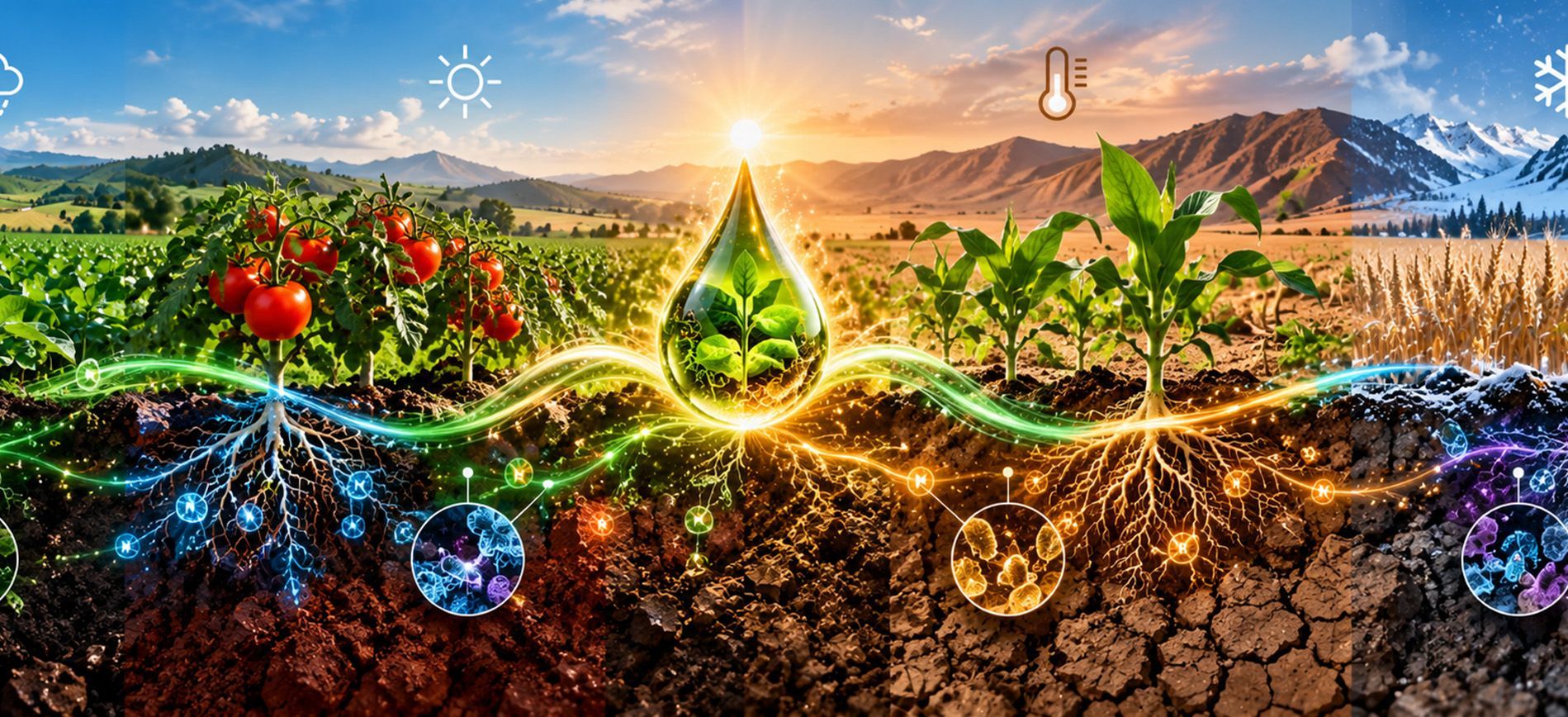
As climate variability increases—bringing erratic rainfall, prolonged droughts, and extreme temperatures—traditional fertilization practices are proving inadequate. Excess fertilizer use is not only inefficient but also contributes to nutrient leaching, greenhouse gas emissions, and long-term soil degradation.
Climate-smart fertilization is a forward-thinking approach that adapts to these challenges. It’s about feeding crops effectively while preserving the environment. By applying the proper nutrients, at the right time, in the right place, and in the appropriate form, farmers can boost productivity, build resilience, and reduce environmental impact. This blog explores six powerful strategies that define climate-smart fertilization in 2026 and beyond.
1.4R Nutrient Stewardship – The Cornerstone of Smart Feeding
The 4R Strategy—Right Source, Right Rate, Right Time, and Right Place—is the global benchmark for sustainable nutrient management:
- Right Source: Match fertilizer types (e.g., organic, coated, bioavailable) with specific crop and soil needs.
- Correct Rate: Base nutrient quantities on soil test results and plant uptake data.
- Right Time: Apply nutrients in sync with crop growth stages and forecasted rainfall.
- Right Place: Use delivery techniques like banding or injection to ensure nutrients reach the root zone directly.
2. Precision Fertilization – Using Data to Optimize Every Dose
Innovative farming tools now enable site-specific nutrient application based on crop performance and soil variability. Technologies include:
- GPS-guided spreaders
- Variable Rate Application (VRA)
- Soil maps and satellite-based decision tools
- IoT-based fertigation systems
These systems enhance efficiency by delivering only what the plant needs—where and when it needs it.
3. Enhanced Efficiency Fertilizers (EEFs)
EEFs are designed to reduce nutrient losses through leaching, volatilization, or denitrification. Popular examples include:
- Slow-release fertilizers: Nutrients are released gradually, reducing the need for frequent applications.
- Nitrification inhibitors: Extend nitrogen availability and reduce nitrate leaching.
- Urease inhibitors: Slow down the breakdown of urea, cutting down ammonia emissions.
EEFs can significantly reduce N₂O emissions, one of the most potent greenhouse gases.
4. Organic Fertilizers – Rebuilding the Soil Naturally
Organic fertilizers such as compost, manure, and bio-extracts improve soil structure and support beneficial microbes. Their benefits include:
- Enhanced soil carbon and moisture retention
- Reduced synthetic input dependency
- Lower risk of nutrient runoff
When integrated with conventional fertilizers, they build a sustainable nutrient cycle for long-term productivity.
5. Soil Testing and Nutrient Planning
Regular soil testing forms the basis of responsible fertilization. It helps:
- Diagnose deficiencies or toxicities
- Calibrate NPK and micronutrient applications
- Prevent over-fertilization and its environmental consequences.
Crop rotation and balanced fertilization based on soil diagnostics support sustainable soil health and yield.
6. Nanofertilizers – Next-Gen Input for High-Efficiency Agriculture
Nanofertilizers are engineered to release nutrients at the nanoscale, making them:
- Highly absorbable by plant roots
- Controlled-release and stress-resistant
- Low in wastage and environmentally friendly
These fertilizers increase nutrient-use efficiency and are rapidly gaining traction in precision fertigation and foliar programs.
Key Benefits of Climate-Smart Fertilization
- Cost Savings: Reduced fertilizer use and fewer applications
- Yield Gains: More precise feeding enhances plant growth
- Soil Regeneration: Organic matter restoration and microbial support
- Climate Resilience: Crops better resist drought, floods, and heatwaves
Common Challenges & Solutions
| Challenge | Recommended Solutions |
|---|---|
| High cost of advanced inputs | Utilize government incentives and bundled smart-input programs |
| Limited access to agri-tech | Partner with cooperatives and service providers for tool sharing |
| Lack of farmer training | Offer digital apps and regional advisory platforms |
| Weather uncertainty | Use forecast-linked fertigation and weather-adapted nutrient scheduling |
Conclusion: A Smarter, Greener Path Forward
Climate-smart fertilization is more than a trend—it’s a resilient pathway for feeding a growing population under climate pressure. By combining modern technology, sustainable inputs, and data-driven decision-making, farmers can produce more with less—preserving both productivity and the planet.
At Green Gubre Group, we support these transitions with
cutting-edge fertilizer solutions built for compliance, efficiency, and crop-specific performance.
Author Bio
Chief Agronomy Officer at AgriBegri, Sanjeev Reddy, has over 20 years of expertise in agronomy and sustainable farming. He leads AgriBegri’s mission to provide farmers with practical, research-backed solutions and expert advice, helping improve agricultural productivity across India with a focus on innovation and resource efficiency.